Pipe Replacement
When pipe repair is no longer enough — repeated pinholes, widespread corrosion, or a material reaching the end of its life — replacement is the more reliable choice. Pipe replacement can mean a single section or a full repipe, depending on the condition.
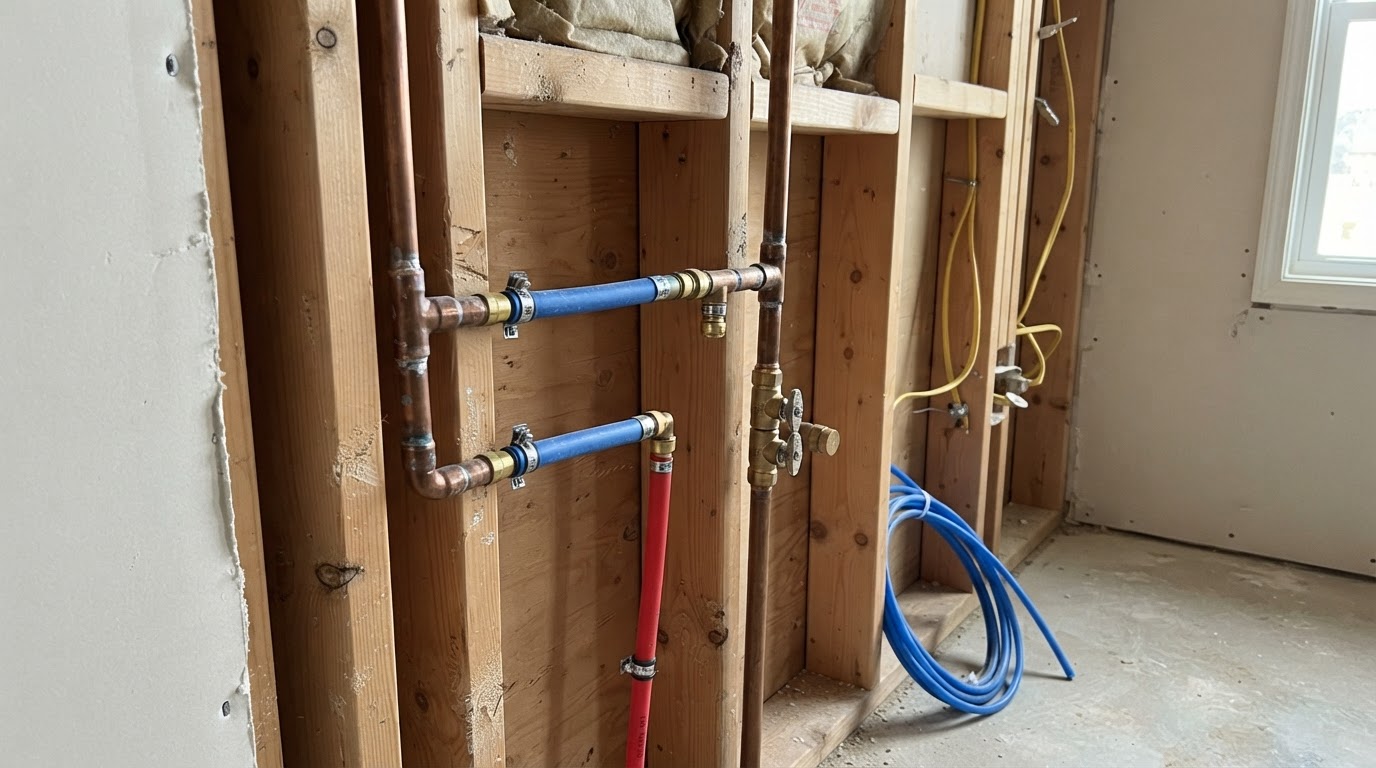
Common reasons you may need this service
- Pinholes keep appearing in the same area.
- An older home has corroding galvanized lines.
- Water has a metallic taste or discoloration.
- Pressure drops across multiple fixtures.
- A renovation is exposing aging lines.
Typical tasks and considerations
- Assessing the condition of the existing lines.
- Planning the replacement scope (section or full).
- Removing the failed pipe and installing new material.
- Reconnecting fixtures and appliances.
- Pressure-testing the new system.
Common problems and possible causes
Galvanized steel lines
Older galvanized lines corrode from the inside, restricting flow and discoloring water. Replacing them restores pressure and quality.
Widespread pinholes
When pinholes recur across a section, the whole run is likely corroding. Replacing it ends the cycle.
Polybutylene
Some older plastic lines are prone to failure. Replacement with modern material removes the risk.
Pipe Replacement — frequently asked
Related plumbing services
Pipe Repair
Repairing damaged or leaking pipes — from pinholes to frozen-line cracks and loose joints.
Learn moreWater Pressure Problems
Diagnosing low or uneven water pressure across fixtures and the whole property.
Learn moreResidential Plumbing
Plumbing for homes, apartments, and rental properties — fixtures, drains, and supply.
Learn moreNeed pipe replacement?
Describe what's happening and we'll review the details with you before any work begins.